



When you incorporate in Canada, one of the most important steps you’ll take after receiving your articles of incorporation is setting up your corporation minute book.
This book is the official record of your business. It keeps track of who owns the company, who manages it, and what decisions have been made since day one.

The good news? You don’t need to pay lawyers or accountants big fees every year to maintain it. With the right guide, you can create and update your own minute book easily—and save hundreds of dollars.
This article shows you how to do it yourself, why each part matters, and the risks of leaving things out.

What is a Corporate Minute Book Under CBCA/OBCA?
A corporation minute book is a legal record required under the Canada Business Corporations Act (CBCA) for federal corporations and the Ontario Business Corporations Act (OBCA) for Ontario corporations.
It’s where you keep all the essential paperwork that proves your corporation exists, is in good standing, and is operating legally.
What Must a Compliant Minute Book Include?
At minimum, your book should contain:
- Articles of Incorporation (your official setup document)
- Bylaws (rules for running the corporation)
- Registers for directors, officers, and shareholders
- Share certificates and share ledger
- Annual resolutions or meeting minutes
- Changes such as new directors, resignations, or address changes
- Corporate filings like annual returns
Why is Maintaining a Minute Book Legally Required?
Canadian law requires every incorporated business to keep its records up to date. If you don’t, your corporation can face penalties, audits, and even cancellation.
More importantly, without a proper minute book:
- Share ownership may be disputed
- Banks and investors may refuse financing
- CRA lists their corporate records and other corporate obligations. They can impose fines during audits
DIY vs Professional Management: What’s the Difference?
Here’s the key difference most business owners don’t realize:
- If you keep your own physical minute book, you can update it yourself each year at no cost.
- If you let an Ontario minute book manager, accountant, or lawyer maintain an electronic minute book, you’ll usually pay annual fees for them to update and store it.
Comparison
| Option | Cost | Who Updates? | Pros | Cons |
| DIY Physical Binder | One-time cost for binder (~$150.00) | You | No yearly fees, total control | Must remember to update yourself |
| Electronic Minute Book Manager/Accountant/Lawyer | $200–$600+ per year | They | Outsourced updates, professional oversight | Ongoing fees every year |
Bottom Line: It’s not complicated to do yourself. A physical binder with organized tabs is enough to keep your business compliant and save money.
How Do I Create a Minute Book—DIY Checklist?
Here’s your step-by-step DIY setup:
✅ Buy a corporate binder (or set up digital folders if you want both)
✅ Insert your Articles of Incorporation
✅ Add your bylaws (provided in our minute book package and offered affordably)
✅ Record initial resolutions (appointing directors/officers, issuing shares, provided in our book)
✅ Issue share certificates and log them in your share register (provided in our book)
✅ Add registers for directors, officers, and shareholders (provided in our book)
✅ Insert annual resolutions after filing your annual return each year
✅ Keep space for any amendments or special decisions
How to Distribute Shares in Your Minute Book
Shares are the foundation of ownership. Setting them up correctly is critical.
Here’s how to handle it in your minute book:
- Decide on total authorized shares (e.g., 100 or 1,000,000)
- Determine value per share
- For startups, shares are often issued at a low price per share (e.g., $1000.00 each)
- It should be high enough to track real value but low enough that founders can afford to buy in
- Record who owns how many shares in the shareholder register
- Issue share certificates and keep copies in the book
- Update the ledger whenever shares are transferred or new ones issued
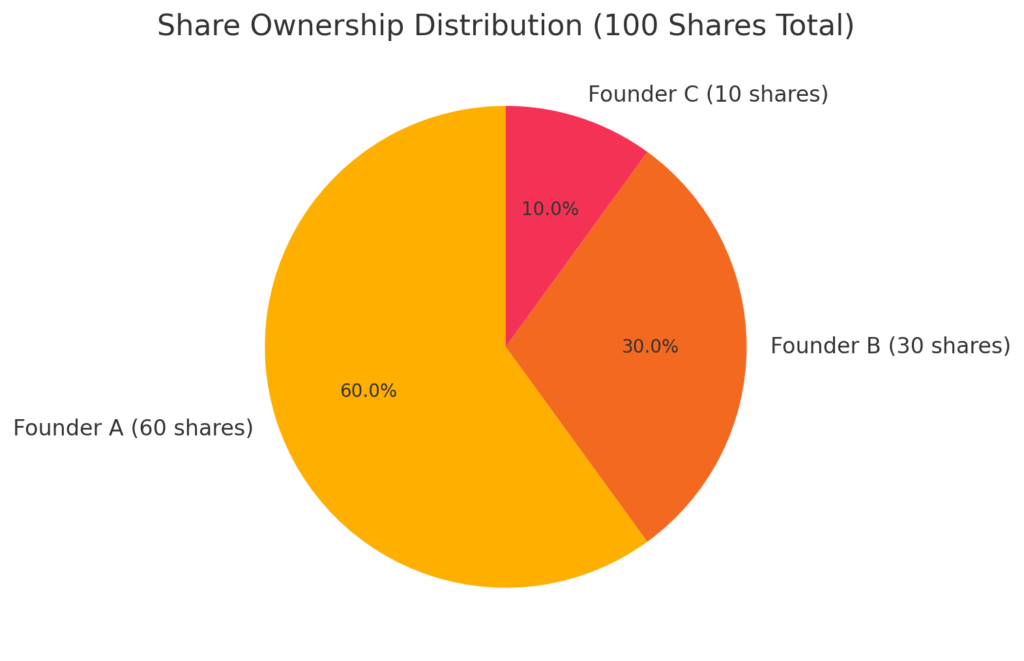
Example:
- 100 shares authorized at $1000.00 each
- Founder A buys 60 shares ($60,000)
- Founder B buys 30 shares ($30,000)
- Founder C buys 10 shares ($10,000)
- Ledger shows ownership split and total contributions
This makes it easy to track investment and ownership percentages.

Should I Use Physical or Digital Formats?
- Physical Minute Book
- Binder with tabs for each section
- Stored at your registered office
- No annual costs
- Best for cost savings
- Digital Minute Book
- Convenient, searchable, easier to share with accountants/lawyers
- Will require subscription or service fees if managed by professionals
👉 Most small business owners save money by starting with a physical binder. You can always scan and keep a digital backup for safety.
When & Why Would Lenders, Investors, or CRA Request It?
Your minute book may be requested in several situations:
- Banks/lenders: To approve loans or credit
- Investors: To confirm ownership before investing
- CRA: During audits to confirm directors and shareholder records
- Lawyers: In mergers, acquisitions, or reorganizations
A well-organized minute book speeds up these processes and shows professionalism.
What Are the Risks of Not Having an Up-to-Date Minute Book?
If you don’t keep your book current, you risk:
- Disputes over share ownership
- CRA penalties in audits
- Denied financing from lenders
- Losing investor opportunities
- Non-compliance under CBCA/OBCA
How Often Should You Update Your Minute Book?
Update whenever something changes. At minimum:
- Once per year → Add annual resolutions after filing your annual return
- When directors/officers change
- When new shares are issued or transferred
- When addresses or bylaws change
Affordable DIY and Service Options
- DIY Binder Kit: $150.00 one-time cost including the corporate search (package A)
- Templates: Including templates for bylaws, resolutions, and registers
- Lawyers/Accountants: Provide oversight but charge ongoing annual fees ($200–$600+)
For startups, DIY with a physical binder is usually the most cost-effective option.
How Does Minute Book Maintenance Differ Between Provinces?
The basics are the same across Canada, but small differences exist:
- Federal (CBCA) → Book must be at your registered office or another approved Canadian location
- Ontario (OBCA) → Must be kept at your registered office in Ontario
- Other provinces (BC, Alberta, Manitoba, etc.) → Similar requirements, with growing acceptance of digital books
No matter the province, you must have a minute book to stay compliant.
Frequently Asked Questions About Corporate Minute Books in Canada
Do I Need a Lawyer to Create a Corporate Minute Book?
No. You can create and maintain a corporation minute book yourself. A lawyer can help if your corporation is complex, but most small business owners can save money by setting up a physical binder or digital folder with the right documents.
What’s the Difference Between a Corporate Minute Book and Corporate Records?
They are the same thing. A corporate minute book is simply the formal name for your corporation’s legal records, including articles of incorporation, bylaws, resolutions, and shareholder information.
How Long Do I Need to Keep a Corporate Minute Book?
Indefinitely. Your corporate records must be kept for the entire life of the corporation. Even after a corporation is dissolved, the records may need to be available for several years for tax or legal purposes.
Can I switch from a physical minute book to a digital one later?
Yes. You can scan your physical documents and organize them into a digital minute book. Just make sure the records are complete, secure, and easy to access if requested by CRA, lenders, or investors.
Where Should I Store My Corporate Minute Book?
By law, it must be kept at your registered office (federal under CBCA, or provincial under OBCA/other acts). You may keep an electronic version as a backup, but the official record should be stored at the registered office or another approved location in Canada.
Ontario Business Central: Helping You Stay Compliant & Save Money
At Ontario Business Central, we’ve been helping entrepreneurs and corporations since 1992. Our goal is simple:
- To show you what’s necessary for your business to stay compliant,
- To guide you step by step on how to get things done quickly,
And to help you save money wherever possible by giving you practical, cost-effective options.
Your corporation is too important to risk on missed filings or incomplete records. Let us help you stay organized, compliant, and ready for every opportunity.
inquiries@ontariobusinesscentral.ca
Toll-Free: 1-800-280-1913
Local: 1-416-599-9009
Fax: 1-866-294-4363
Office Hours: 9:00am – 5:00pm
Monday – Friday E.S.T.
Ontario Business Central Inc. is not a law firm and cannot provide a legal opinion or advice. This information is to assist you in understanding the requirements of registration within the chosen jurisdiction. It is always recommended, when you have legal or accounting questions that you speak to a qualified professional.
Related Posts

10 Common Ontario Business Renewal & Update Mistakes

Renewing Your Ontario Business Registration

How To Renew Your Business Registration

What Should You Include in Your Corporate Minute Books to Ensure Compliance?

Renew Your Ontario Master Business Licence To Keep It Active